
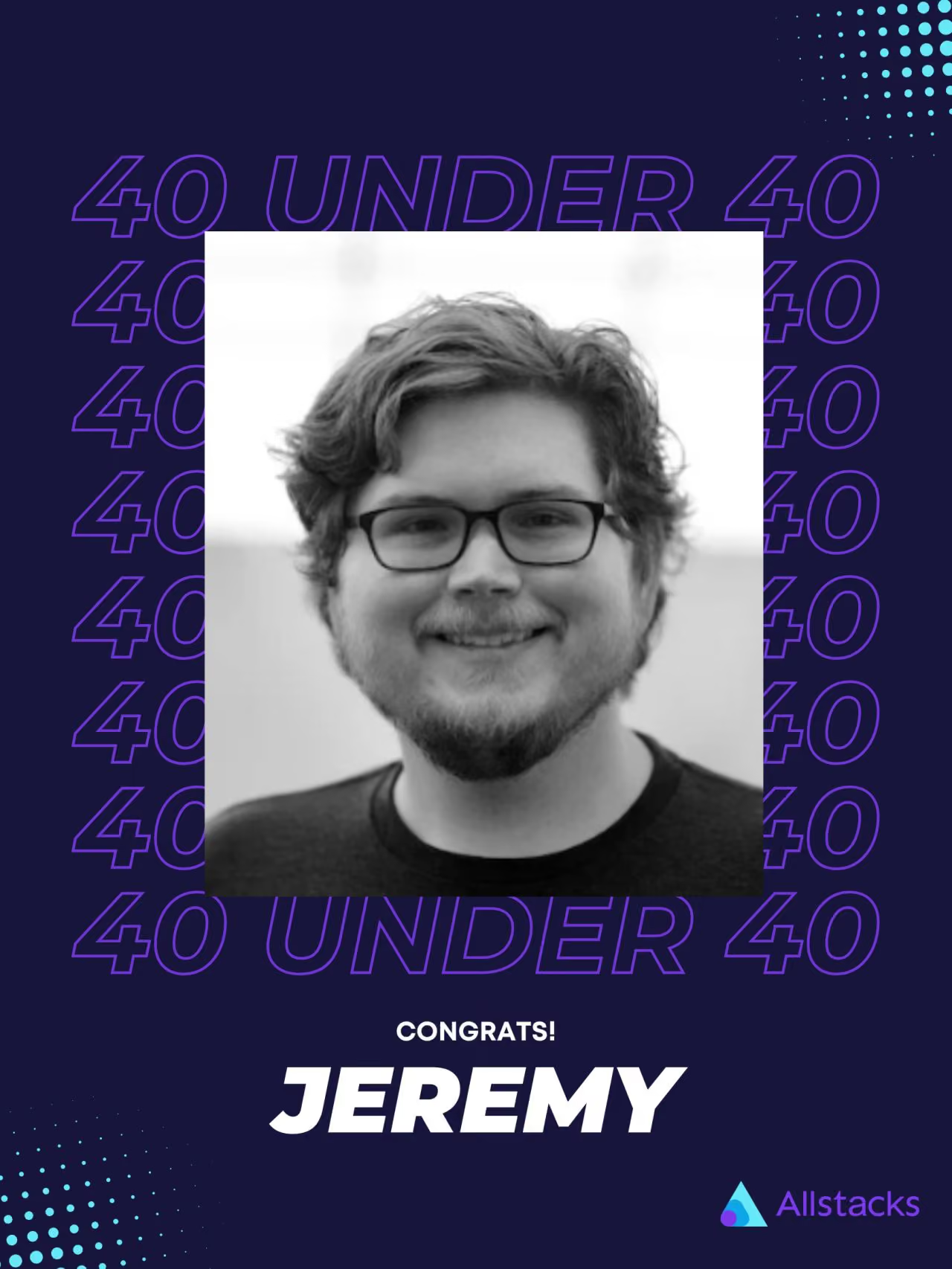
Jeremy Freeman Named to Triangle Business Journal's 40 Under 40
Jeremy Freeman's recognition in the Triangle Business Journal's 40 Under 40 highlights his impact on engineering leadership and bridging the gap between tech and business outcomes.

Hersh Tapadia
Co-Founder & CEO
Date
May 6, 2026
Tags
Community
Why Jeremy Freeman's 40 Under 40 Recognition Matters
When I co-founded Allstacks with Jeremy Freeman, I knew I was partnering with a strong technical leader. What I've come to appreciate over the years is how much his thinking has shaped not only our company, but the broader conversation about modern engineering leadership.
So when I learned Jeremy had been named to the Triangle Business Journal's 40 Under 40 list, I wasn't surprised. The recognition fits the work.
The kind of leader this moment requires
Engineering leadership is changing fast, and not in the surface-level "we adopted a new tool" sense. The real shift is in how teams operate, how decisions get made, and how we measure what actually matters. That requires a different kind of leader, one who can hold both the technical depth and the business context at the same time.
Jeremy operates that way every day.
Solving the problem everyone is starting to feel
From the earliest days of Allstacks, Jeremy has been focused on something the industry is only now catching up to: the disconnect between day-to-day engineering work and real business outcomes.
That gap has always been a problem. But with the rapid adoption of AI and automation across software teams, it's becoming the problem. Writing code isn't the bottleneck anymore. Understanding the work, validating it, and aligning it to outcomes is where teams are getting stuck.
A lot of Jeremy's thinking and writing has centered on this, particularly around three ideas I keep coming back to in conversations with customers and peers:
- The growing "measurement gap" in AI-driven development
- The importance of upstream inputs like spec quality
- The need for engineering intelligence to be operational, not just observational
These aren't theoretical concepts. They're a direct response to what he's hearing from engineering leaders who are wrestling with these problems right now.
Building through a period of real change
The expectations on engineering teams have expanded significantly over the past few years. Leaders are being asked to ship faster, prove their impact more clearly, and integrate AI capabilities responsibly, often all at once. Meanwhile, the systems we rely on to measure and manage engineering work haven't kept pace.
Jeremy's role at Allstacks has been about closing that gap. Helping teams see how work actually flows through their systems, and where it connects, or doesn't, to the outcomes the business cares about.
That perspective is becoming more relevant by the month, especially as organizations try to move from one-off AI experiments into repeatable, measurable impact.
A recognition that fits the moment
The 40 Under 40 list is about impact: inside a company, across an industry, and in the broader community. In Jeremy's case, it captures both the work we're doing at Allstacks to rethink engineering intelligence and the larger conversation he's helped shape about what good engineering leadership looks like today.
Congratulations, Jeremy. Well deserved.
— Hersh
Table of contents



/ get started /