
/ Product Studio: AI PRD /
The AI product management tool for agentic development.
You're burning tokens building the wrong things using vague requirements and vibe coding prompts.
Product Studio is the AI product management tool for ideating, defining, and refining requirements and specs with complete context, faster and cheaper.


/ impact /
Streamline dev hand-offs.
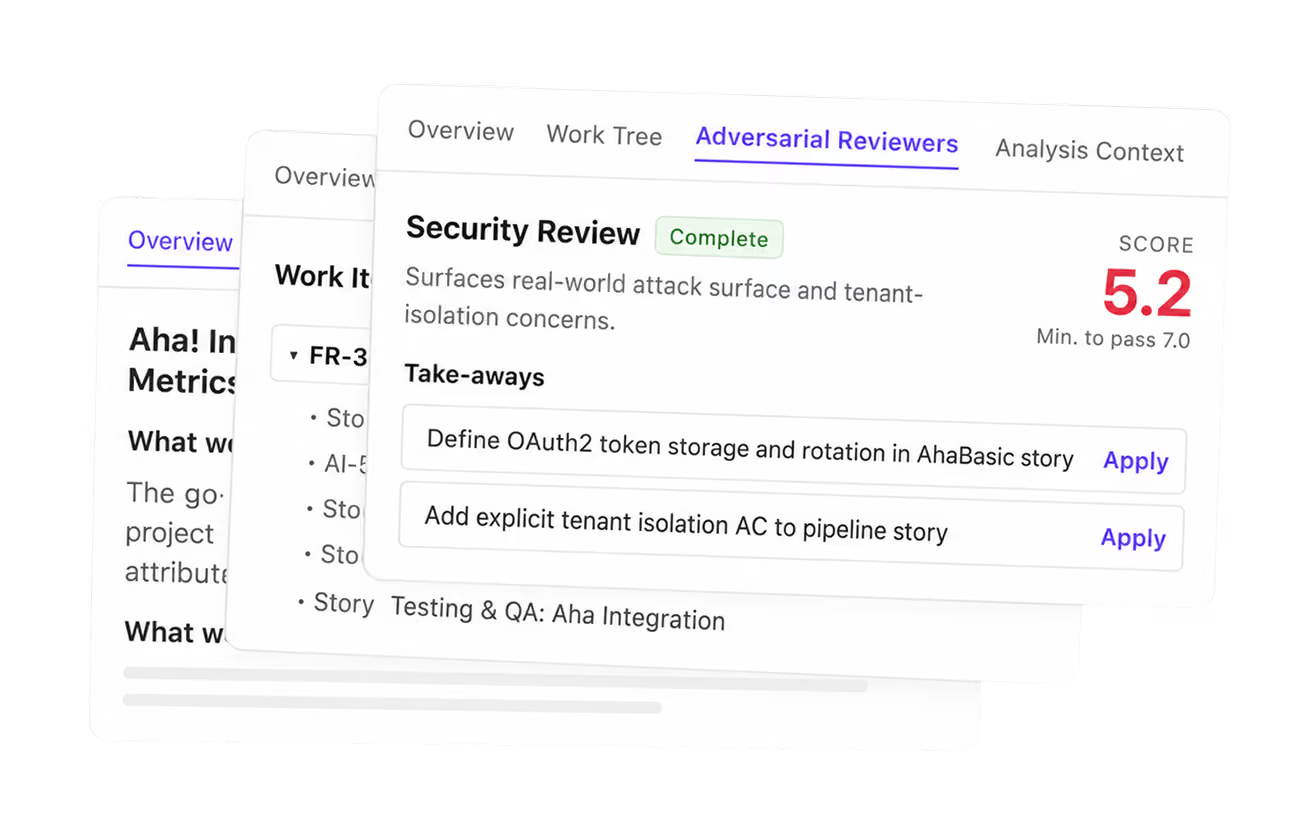
Build-ready specs, scored for readiness and grounded in code, customer voice, and delivery data.
Less rework downstream.
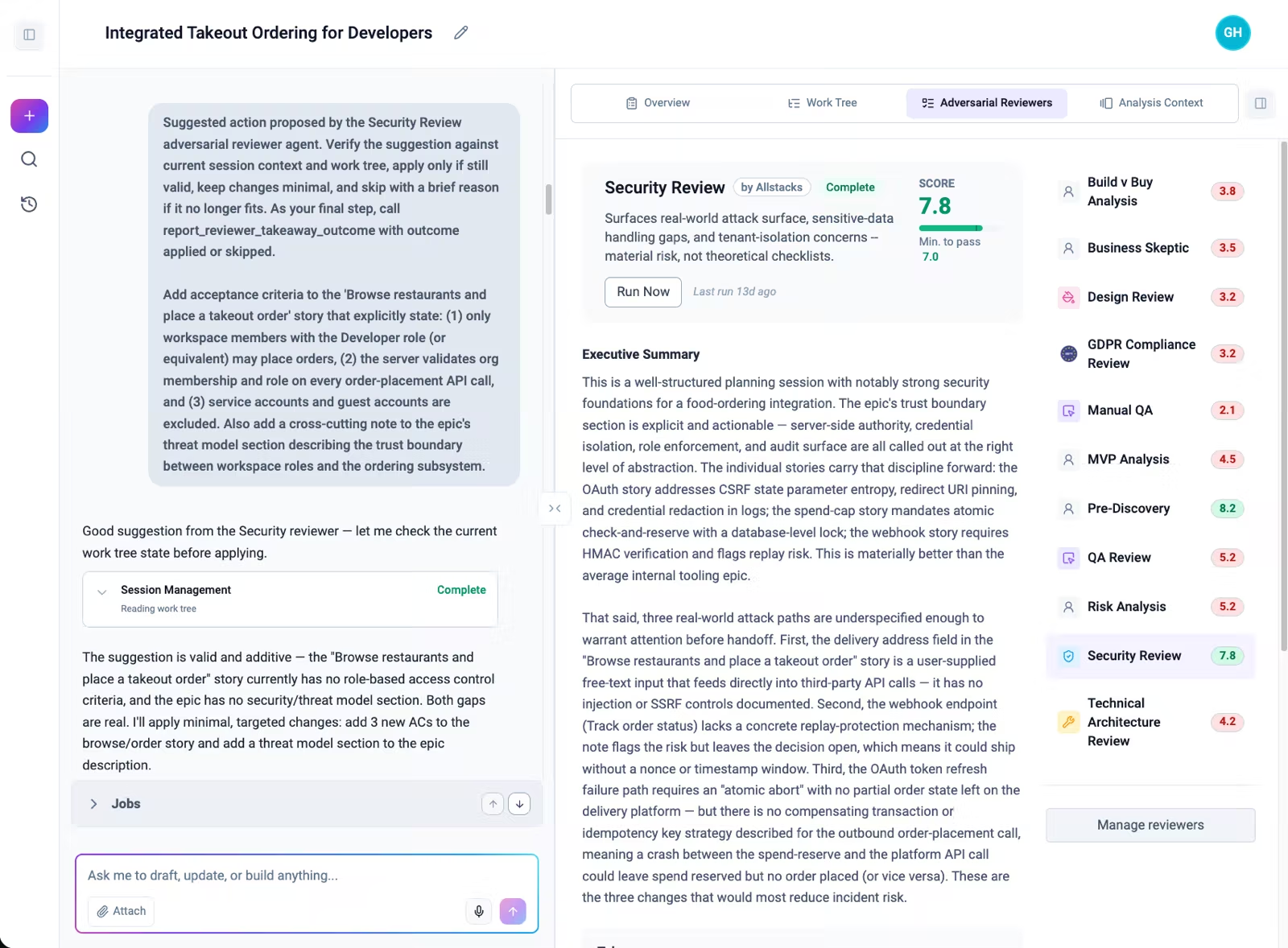
Adversarial reviewers stress-test each artifact and flag risks before they reach your team.
More confident product decisions.
Every score and spec cites the exact tickets, commits, calls, and docs behind it, so the plans hold up.

/ how it works /
INPUTS
Connect.
Connect to your tool stack across project, code, delivery, collaboration and documentation.
ALLSTACKS
Contextualize.
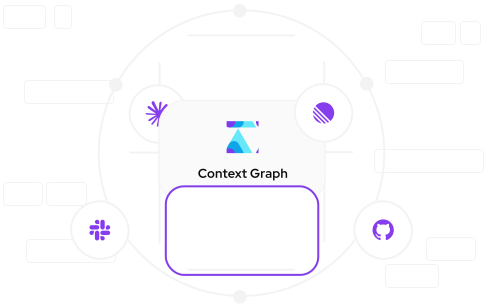
Allstacks normalizes and enriches your complete historical data set to create meaningful signals you can act on.
Outputs
Create.
Agentic analysis runs continuously to help you define and refine with AI reviewers to pressure-test and improve your requirements.


/ capabilities /

Product management agents.
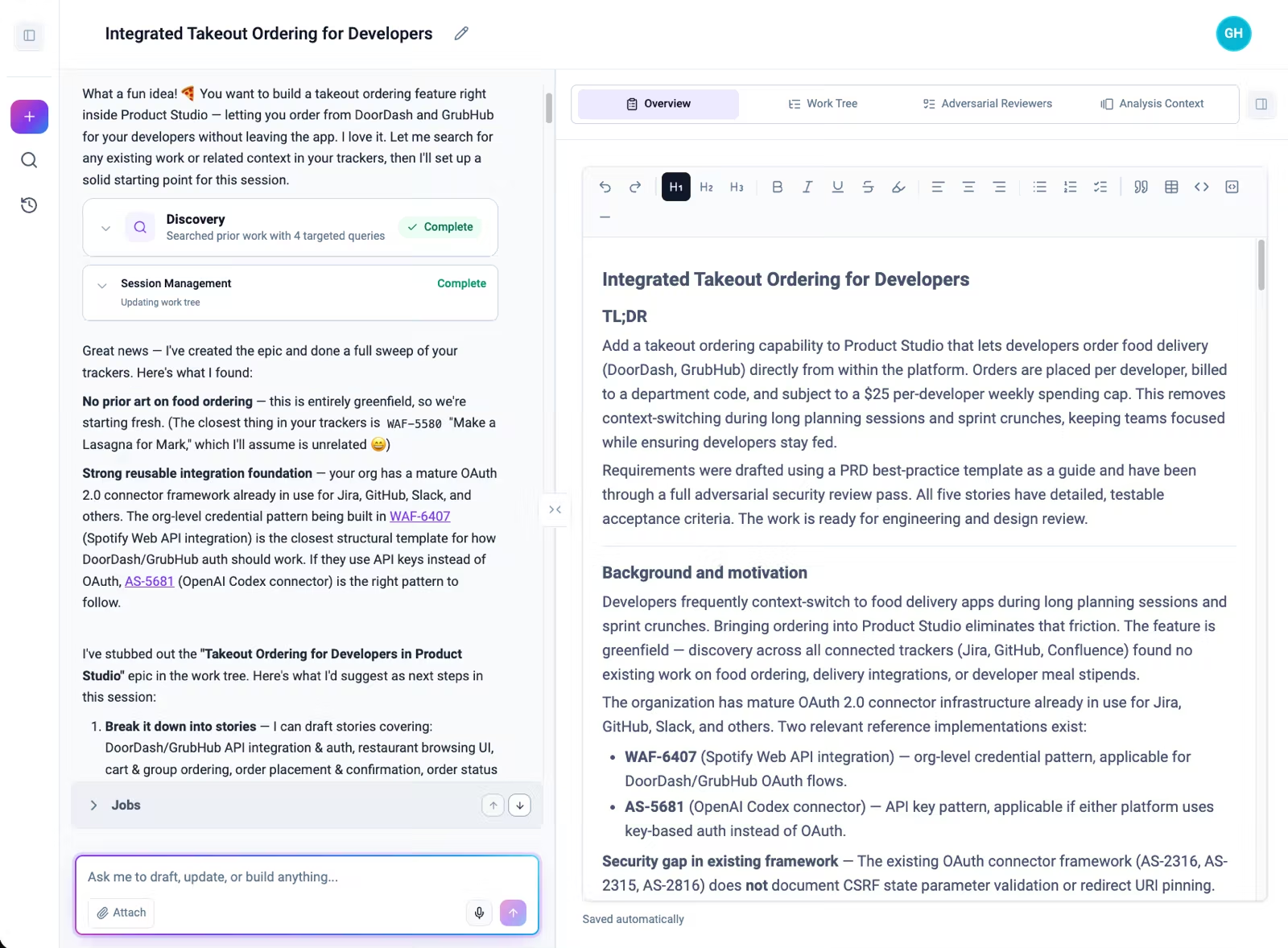
Share rough ideas, make it real, validate against existing work, and evaluate its readiness.
Adversarial AI reviewers.
Pressure-test every artifact against key aspects, such as security, architecture, QA, feasibility, and go-to-market.
Evidence for claims.
Trace artifacts to the exact features, tickets, commits, and customer calls behind it, so the plan holds up.
Build-ready outputs.
Requirements and plans contain rich context for agentic development and sync directly to your project tools
/ see it /
/ use cases /
Research and define products and features.
Ideate on products and features with business and technical context automatically surfaced.
Refine epics and tickets before sprints.
Review complete initiatives, epics, and tickets for engineering readiness.
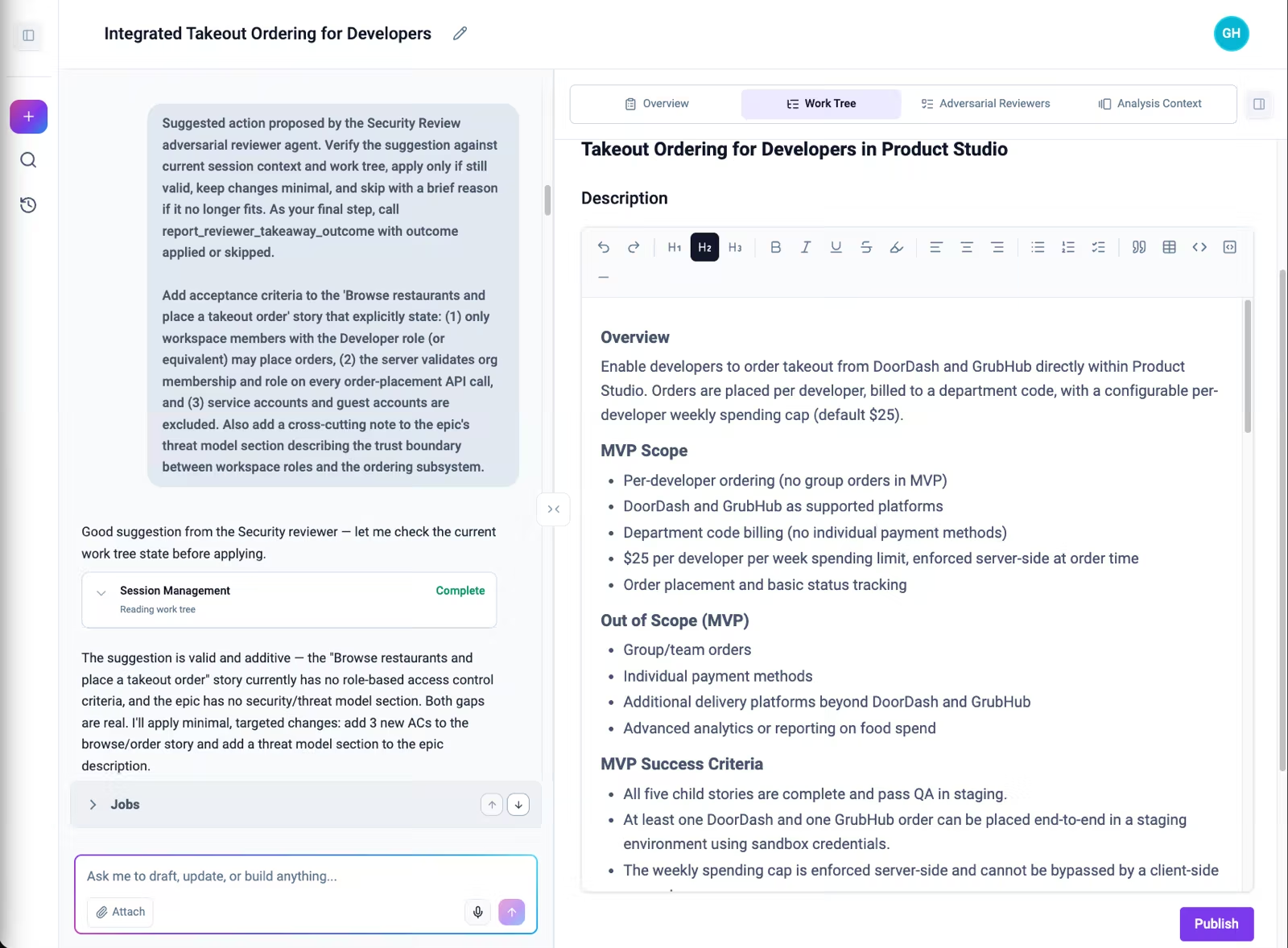
Generate PRDs and specs from a rough idea.
Turn your idea into a structured product requirements document with scope, user stories, and acceptance criteria, then score it for readiness before it reaches engineering.
/ customers /
4×
75%

Julian Limon
CTO, Co-founder
Julian Limon
CTO, Co-founder

/ question & answers /
Is Product Studio an AI product management tool?
Yes. Product Studio is an AI product management tool for product and engineering teams. It supports the product and software development lifecycle end-to-end: conducting product discovery, synthesizing context, turning prioritized ideas into requirements, stress-testing readiness on the specs on the things you want to build, and measuring impact through delivery. What separates it from most AI product management tools is where the context comes from. Product Studio normalizes and enriches data to create meaningful context from how your software is built, what customers and prospects are signaling, how your teams deliver and work, and many unstructured points such as documentation through the Allstacks Context Graph. The output from Product Studio reflects how your product and your teams actually work rather than what a general-purpose model can infer from a prompt.
Can Product Studio generate a PRD?
Yes. Describe a feature or a goal and Product Studio drafts a full product requirements document: problem statement, goals and success metrics, use cases, scope, technical and go-to-market considerations, or any other section you define. Unlike a standalone AI PRD generator, it does not start from a blank prompt. It pulls the customer feedback, technical constraints, and delivery history already attached to that area of the product, then adversarial reviewers pressure-test the draft for security, architecture, QA, and feasibility gaps before the spec reaches engineering. The finished PRD syncs to Jira, Linear, Azure DevOps, GitHub, or GitLab.
What is Product Studio?
Product Studio is an AI product management workspace where product and engineering teams research, define, refine, and share specs grounded in your actual codebase, customer voice, and delivery history. Start from a raw idea, and Product Studio surfaces the customer feedback, technical context, and delivery history behind it, defines the spec against that context, scores it for readiness, and stress-tests it with adversarial AI reviewers before a line of code gets written. The result: scope stops tripling at handoff, rework goes down, and every decision comes with the evidence to back it up.
How is this different from building it in Claude?
The gaps in building with Claude are typically context breadth and depth, the effectiveness of the agent harnesses, and multiplayer modes. These can all be built, but typically require significant development and ongoing maintenance.
Claude knows what instructions, files, and skills it has access to in whatever state it's loaded. Product Studio runs on years of your team's delivery history already encoded as a causal graph, what blocked what, which decisions drove which outcomes, so every session starts from your actual history.
Raw context creates a new problem: something has to manage what enters the model's window and when. Feed enough raw context into a single Claude session and precision degrades: the model hallucinates a relationship between two entities that were never connected, or drops a constraint it was given earlier in the session to make room for what just came in. Product Studio's agent harness routes each query along the graph's waypoints in small, targeted calls, holding accuracy at a scale a Claude agent session can't sustain.
The third gap is the session itself. Claude's sessions aren't as easily shared and don't stay persistently updated. Product Studio's session is shared and always on. Your PM, engineering manager, and developers work from the same live state, and every artifact written enriches the graph for the next one.
Is Product Studio a replacement for Jira or Linear?
No. Product Studio defines and readiness-tests the spec and work plan from a broader scope of understanding. Push the finished requirements and tickets into Jira, Linear, Azure DevOps, GitHub, or GitLab, and it stays in sync with your work as scope shifts.
Does Product Studio replace my coding agent, like Cursor, Copilot, or Claude Code?
No. Product Studio is not a coding agent. It is designed for product and engineering teams to research, ideate, define and refine requirements and specifications that get exported to project tools or into Cursor, Claude Code, Copilot, Lovable, or whichever coding agent your team already uses.
How do I know I can trust the outputs enough to act on them?
Every score, recommendation, and draft spec cites the exact tickets, commits, calls, and documents behind it. Trace any output back to the evidence that produced it, so the plan holds up when you walk it into a leadership review.
What tools does Product Studio connect to?
Allstacks connects to most of the common product and software development lifecycle tools across project, code repos, document management, and call recording systems, including Jira, Linear, GitHub, GitLab, Azure DevOps, Confluence, Notion, Slack, Gong, and Zoom.
Is my data secure?
Product Studio is secure, SOC 2 Type II certified, with no parallel store of your code and no training on your data. See our trust site for more details.
How do I get started with Product Studio?
Sign up for free today. Easily create an account, connect your tools or jump right in to start ideating and defining your next product or feature. The agent itself will help you shape best practice requirements and specifications. Once your tools are connected, responses will be backed by your own organizational context.
/ get started /